
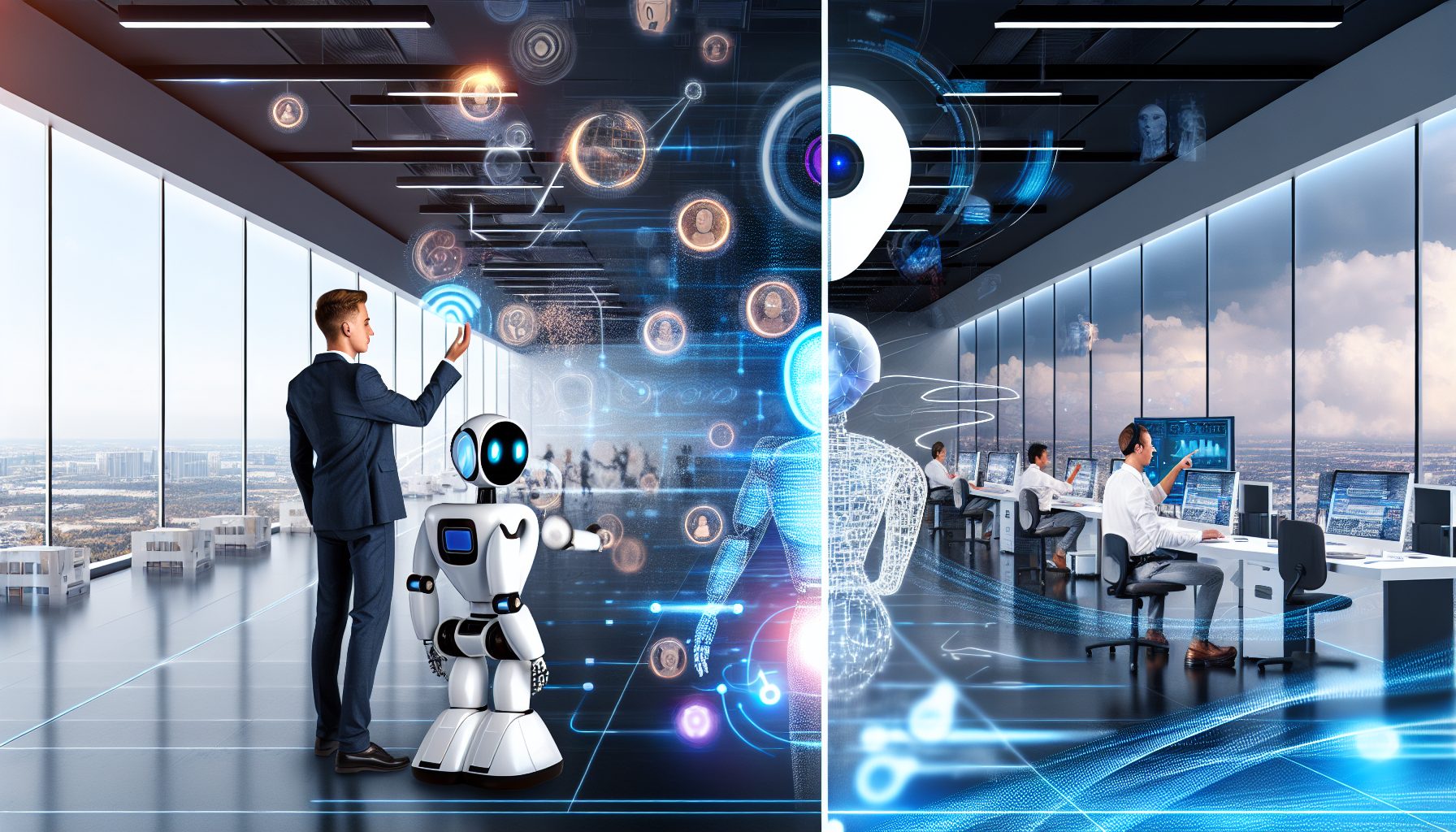
LLM Agents Showdown: Autonomous Agents vs AI Copilots for Efficient Workflow Automation
In today’s fast-paced digital landscape, efficiency is king. As businesses strive to enhance productivity and streamline operations, the rise of AI-powered agents has brought two main contenders to the forefront: autonomous agents and AI copilots. Understanding the differences, benefits, and applications of each can significantly impact how organizations automate their workflows. This article delves into the showdown between these two innovative technologies, helping you discern which might suit your needs best for efficient workflow automation.
Estimated reading time: 10 minutes
Key takeaways:
- Autonomous agents operate independently, performing tasks without human intervention.
- AI copilots enhance human capabilities by providing suggestions and insights.
- Each technology addresses distinct workflow automation needs.
- Combining both types can lead to improved efficiency and productivity.
- Careful planning is essential for successful integration into existing workflows.
Table of Contents
- Context and Challenges
- Solution / Approach
- Concrete Example / Case Study
- FAQ
- Authority References
- Conclusion
Context and Challenges
First, let’s clarify the concepts. Autonomous agents are self-directed systems that can perform tasks without human intervention. They make decisions based on predefined rules and machine learning insights, enabling them to analyze data and execute tasks efficiently. In contrast, AI copilots are designed to assist human users by providing suggestions and augmenting their capabilities, often seen in tools like code editors and writing assistants.
As organizations adopt these technologies, they face several challenges: How do they choose the right solution? What are the specific pain points each technology addresses? How can they be integrated effectively into existing workflows to maximize benefits? The stakes are high, as selecting the wrong approach can lead to inefficiencies and unmet expectations. It is crucial for organizations to thoroughly assess their current operations and identify areas where these agents can provide the greatest impact.
Solution / Approach
To explore the potential of these technologies, it’s essential to outline how they operate in practice. Autonomous agents excel in environments where repetitive, predictable tasks are prevalent. For instance, in a supply chain management scenario, a logistics autonomous agent can analyze shipping routes in real-time, making autonomous decisions that optimize costs and delivery times with minimal human oversight. This capability allows businesses to adapt quickly to changing conditions, ultimately improving service delivery and customer satisfaction.
On the other hand, AI copilots thrive in settings requiring human creativity and judgment. Take the example of a software developer using an AI coding assistant. The copilot provides code suggestions and debugging tips as the developer works, enhancing speed and accuracy. Rather than replacing the developer’s role, it complements their skills, allowing for faster problem-solving and enhanced outputs. This partnership between human intelligence and AI technology paves the way for innovative solutions and efficient workflows.
The incorporation of these tools into workflows needs careful planning. The best approach often combines the strengths of both types of agents. For in-depth insights on the latest innovations in this space, you can check out Agent AI News, a resource dedicated to the evolution of AI agents and automation solutions.
Concrete Example / Case Study
Imagine a mid-sized marketing firm looking to automate their social media management. They could implement an autonomous agent to schedule posts and analyze engagement metrics automatically. This agent would evaluate the best posting times, response patterns from engagement data, and demographic insights to optimize their strategy. In doing so, the firm can free up valuable time for their human resources to focus on content creation and strategic planning.
Simultaneously, they could deploy an AI copilot to assist the creative team in generating content. As marketers draft posts, the copilot analyzes existing successful posts, suggests catchy phrases, and identifies trending topics to enhance engagement. This dual approach results in streamlined operations, with the autonomous agent taking on repetitive tasks while the AI copilot enhances the creative process. The successful implementation of such a strategy could lead to increased engagement rates on social media platforms and allow the marketing team to focus on higher-value strategic initiatives.
This case illustrates the power of combining both technologies—where the strengths of autonomous decision-making meet the augmentative capabilities of AI-assisted creativity. By recognizing the complementary nature of these agents, organizations can harness the full potential of AI to drive efficiency and innovation in their workflows.
FAQ
1. What are the primary differences between autonomous agents and AI copilots?
The main difference lies in their functionality: autonomous agents operate independently to perform tasks, while AI copilots serve as assistants, enhancing human capabilities by offering suggestions and insights. Understanding this distinction is crucial for organizations as they consider implementing these technologies to improve their workflow.
2. In what scenarios is it better to use an autonomous agent?
Autonomous agents are ideal in environments with repetitive tasks or data-driven decisions, where human oversight is minimal. Examples include logistics, monitoring systems, and basic customer service inquiries. The ability of autonomous agents to operate in predictable contexts allows businesses to allocate human resources more strategically towards complex tasks.
3. Can AI copilots handle complex decision-making?
While AI copilots provide support and suggestions, the final decision-making typically resides with human users. They enhance the decision-making process but are not a substitute for the nuanced understanding and critical thinking required in complex scenarios. This collaborative approach is critical, especially in fields requiring significant creativity and judgment.
Authority References
For further reading on the role of AI in workflow automation, consider exploring:
- IBM: What is Artificial Intelligence?
- Forbes: How AI is Transforming the Future of Work
- McKinsey: AI and the Future of Work
Conclusion
Understanding the differences between autonomous agents and AI copilots is crucial for organizations striving for efficiency in workflow automation. Each technology serves distinct purposes, and a thoughtful combination can yield powerful results. As businesses continue to navigate the automation landscape, leveraging both types of agents presents an opportunity for enhanced productivity and innovation. Consider how these tools can be integrated into your workflow for a more efficient future.


Leave a Reply