
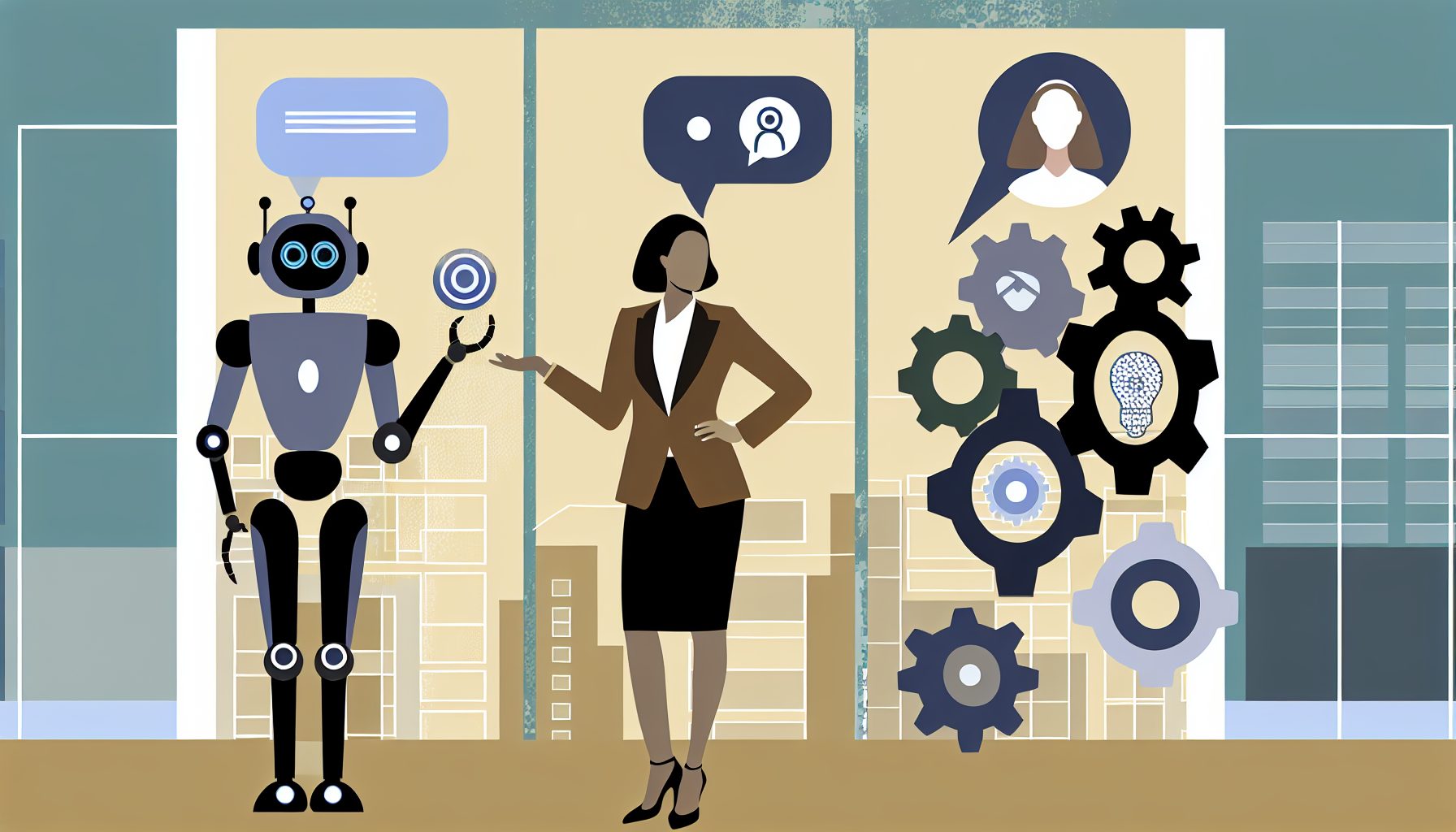
Autonomous Agents in Business Workflows: A Practical Comparison of Agent-Based Copilots, ChatGPT Prompts, and Traditional Automation
As businesses increasingly embrace technology, the landscape of workflow automation is rapidly evolving. From intelligent agents to sophisticated chatbots, organizations have unprecedented opportunities to streamline operations. This article provides a detailed exploration of the distinctions and practical applications of agent-based copilots, ChatGPT prompts, and traditional automation.
Estimated Reading Time: 8 minutes
- Gain insights into the roles of autonomous agents in modern business.
- Understand the differences between agent-based copilots, ChatGPT prompts, and traditional automation.
- Learn about the practical applications and benefits of each tool.
- Explore a real-world case study demonstrating effective implementation.
- Discover key considerations for determining the right approach for your organization.
Table of Contents
- Context and Challenges
- Solution / Approach
- Concrete Example / Case Study
- FAQ
- Authority References
- Conclusion
Context and Challenges
Autonomous agents are systems capable of performing tasks independently, relying on algorithms and data analysis. Within this realm, three primary players emerge: agent-based copilots, ChatGPT-driven assistants, and traditional automation solutions. Each offers unique capabilities and challenges, which are critical for organizations to understand as they look to optimize workflows.
Businesses face several pain points when considering automation, including:
- Increased demand for operational efficiency.
- Need for real-time data processing.
- Demand for enhanced user experiences.
Traditional automation often struggles to adapt to dynamic environments, relying on predefined rules and scripts. This rigidity can pose significant drawbacks in fast-paced industries. In contrast, agent-based copilots, powered by artificial intelligence, can learn from user interactions and adapt their behavior accordingly. On the other hand, platforms like ChatGPT provide conversational interfaces that enhance decision-making processes. Understanding these distinctions is crucial for companies seeking to optimize their workflows through intelligent automation.
Solution / Approach
How do these three approaches stack up against each other? Let’s explore each by examining their functional architectures and real-world implications.
Agent-based Copilots: These leverage machine learning algorithms to assist users in several tasks. By analyzing vast amounts of data, they suggest actions based on historical patterns and predictions. This contextual awareness allows them to provide tailored support rather than merely following a set of instructions.
ChatGPT Prompts: These offer businesses a conversational way to engage with customers and employees. They can answer queries, provide suggestions, and assist with complex tasks through dialogue. This method greatly enhances human-machine interaction, allowing for more intuitive workflows without sacrificing accuracy.
Traditional Automation: This is based on rules-based logic systems that automate repetitive tasks, focusing on data entry or simple workflows. Although effective in certain scenarios, it lacks the flexibility and dynamism inherent in advanced systems.
To gain deeper insight into intelligent automation, Agent AI News offers extensive resources and insights into these transformative technologies, emphasizing the importance of adapting to modern business needs.
Concrete Example / Case Study
Consider a mid-sized e-commerce company that sought to streamline its customer service operations. Previously, they relied on human agents for handling inquiries, leading to long wait times and decreased customer satisfaction. The company decided to pilot both an agent-based copilot and a ChatGPT-driven assistant.
The agent-based copilot analyzed past customer interactions, identifying common queries and suggesting automated responses for those frequent issues. Over time, it learned from new interactions, improving the relevance of its suggestions. Meanwhile, the ChatGPT assistant provided an interactive interface, allowing customers to ask questions in natural language and receive immediate responses even during peak hours.
The results were compelling. The company saw a 30% reduction in response times and a 20% increase in customer satisfaction ratings. By integrating both technologies, they created a synergistic effect, enabling human agents to focus on complex inquiries while efficiently resolving common issues. This case study illustrates how leveraging both agent-based copilots and conversational AIs can yield significant improvements in operational efficiency and customer experience.
FAQ
What are the main differences between autonomous agents and traditional automation?
The primary difference lies in adaptability. Autonomous agents leverage machine learning to evolve their behavior based on user interactions and data, while traditional automation uses rule-based systems that are unable to adapt over time. This capacity for self-improvement makes autonomous agents far more valuable in dynamic environments.
How can businesses determine the right approach for their workflows?
Organizations should assess their operational needs, the complexity of tasks, and their scalability requirements. For businesses that require flexibility and adaptability, such as those in fast-changing industries, autonomous agents are often the best fit.
Are there any limitations to using such technologies?
While powerful, intelligent agents rely on quality data. Poor data quality can lead to inaccurate outputs or decisions. Businesses must ensure proper data management practices to maximize the potential of these systems and avoid various pitfalls.
Authority References
Conclusion
In summary, autonomous agents, agent-based copilots, and traditional automation each offer distinct advantages and limitations. As companies navigate the complexities of modern workflows, understanding these differences empowers them to make informed decisions. By recognizing the unique strengths and applications of each technology, organizations can foster more efficient, adaptable, and customer-centric processes. Embracing these innovations is not just about modernization; it’s a strategic move toward sustainable growth in an increasingly competitive landscape.


Leave a Reply