
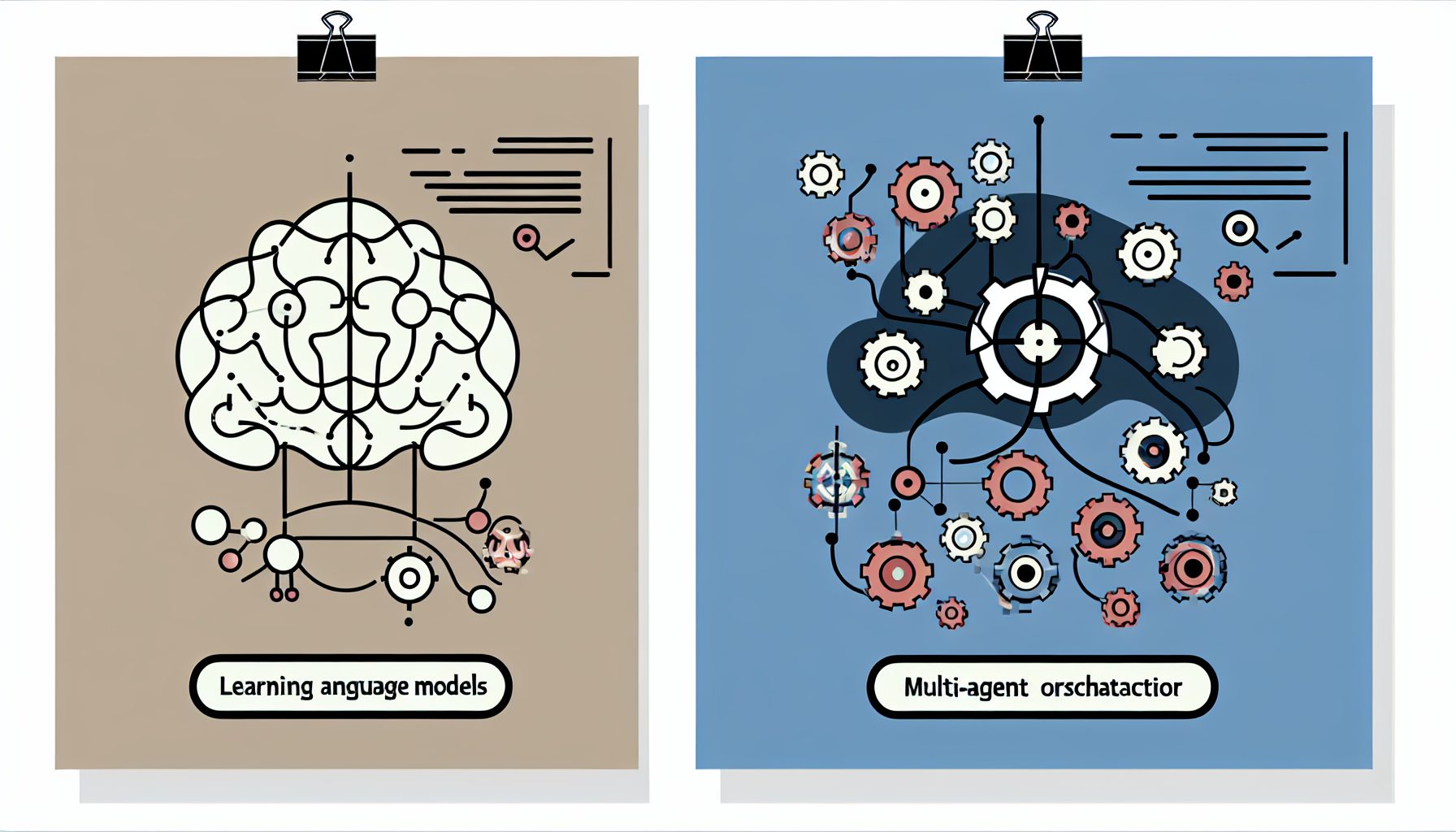
LLM Agents vs. Multi-Agent Orchestrators: A Practical Comparison for Agent Workflows
In today’s rapidly advancing technological landscape, the roles of LLM (Large Language Model) agents and multi-agent orchestrators have become increasingly prominent. As organizations seek to optimize their workflows, understanding the strengths and weaknesses of these two approaches is essential. So, how do LLM agents stack up against multi-agent orchestrators, and which one should you choose for your current needs?
Estimated reading time: 8 minutes
- Understand the distinct roles of LLM agents and multi-agent orchestrators.
- Identify the optimal use cases for each approach.
- Explore real-world applications through a practical case study.
- Learn about integration possibilities for a hybrid workflow.
- Review frequently asked questions to clarify your understanding.
Table of Contents
- Context and Challenges
- Solution / Approach
- Concrete Example / Case Study
- FAQ
- Authority References
- Conclusion
Context and Challenges
To effectively compare LLM agents and multi-agent orchestrators, it’s vital to first define them and explore the context in which they operate. LLM agents are AI systems that utilize large language models to perform tasks such as natural language understanding, generation, and dialogue management. These agents excel in contexts requiring comprehension and generation of human-like text.
Conversely, multi-agent orchestrators are frameworks designed to manage multiple agents simultaneously, allowing for coordination between them to solve complex tasks. This approach is especially useful when different agents need to collaborate to achieve a shared goal. The challenges these systems face often include latency in communication, managing agent behaviors, and ensuring that the overall objective is met efficiently.
Solution / Approach
The choice between LLM agents and multi-agent orchestrators ultimately depends on the specific needs of your workflow. When you’re focused on tasks that require nuanced understanding of language—such as customer support queries or content generation—LLM agents shine. They can generate human-like responses and understand context with remarkable accuracy.
Conversely, if your project involves complex processes requiring the input and collaboration of multiple agents—like logistics management or automated trading—multi-agent orchestrators are better suited. They allow for task distribution, where various agents carry out specific components of a larger task, enhancing efficiency and adaptability.
A practical way to leverage these tools is through the use of agent orchestration platforms. Platforms like these can integrate both LLM agents and multi-agent systems, creating a versatile environment where you can deploy the right tool for the right job. When designing a hybrid solution, consider using a centralized control system that can dynamically allocate tasks based on current workloads and agent capabilities. You can learn more about this integration by visiting Agent AI News, which offers insights into the latest developments in AI agents.
Concrete Example / Case Study
Let’s consider a practical scenario involving a fictional e-commerce company, ShopSmart. ShopSmart encounters a significant volume of customer inquiries during holiday sales, necessitating effective management of their customer service operations.
Initially, they implemented an LLM agent to handle basic customer inquiries, such as tracking orders and answering product questions. This agent significantly reduced the workload on human representatives, responding to simple queries with impressive accuracy. However, as the volume of inquiries surged, the system struggled with context retention and providing nuanced responses for complex issues.
Recognizing the limitations, ShopSmart then opted to deploy a multi-agent orchestrator. This orchestrator allowed them to integrate various specialized LLM agents, each designed to tackle specific types of queries. One agent focused on order tracking, another on product details, and a third on handling complaints. The orchestrator managed communication between these agents, ensuring customers received timely and accurate responses.
As a result, ShopSmart not only improved response times but also enhanced customer satisfaction. They learned that the key to an effective system lay in recognizing where each type of agent excelled and orchestrating their strengths to manage complex workflows.
FAQ
1. What are the main advantages of using LLM agents?
LLM agents are exceptionally good at understanding and generating human-like text, making them ideal for tasks that involve language processing, such as content creation and customer support.
2. When should I consider a multi-agent orchestrator over LLM agents?
If your project involves multiple tasks that require collaboration between different specialists, a multi-agent orchestrator can efficiently manage the coordination and execution of these tasks.
3. Can I combine LLM agents and multi-agent orchestrators in my workflow?
Yes, combining both allows you to leverage the strengths of each approach. You can use LLM agents for specific language tasks while utilizing an orchestrator to manage multiple agents for more complex workflows.
Authority References
Conclusion
Understanding the differences between LLM agents and multi-agent orchestrators is crucial for optimizing your workflows. By analyzing your specific needs and the complexity of your tasks, you can choose the best approach—whether it’s the nuanced capabilities of LLM agents or the collaborative power of multi-agent orchestrators. Remember, a strategic hybrid solution can often yield the best results, allowing you to enhance efficiency and effectiveness in your processes.


Leave a Reply