
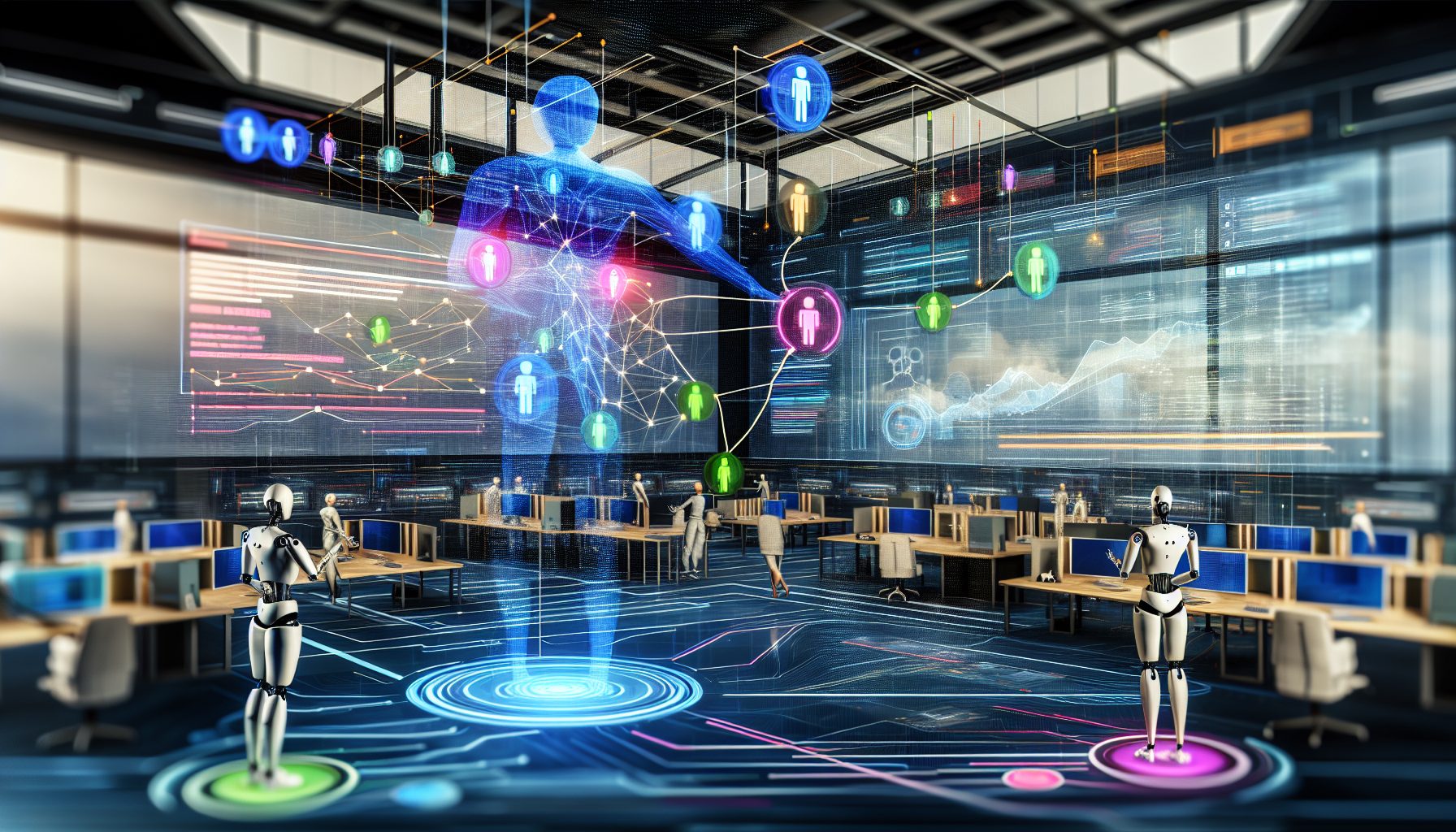
Autonomous Agent Orchestration in Practice: Comparing Agent Workflows, Multi-Agent Systems, and Copilot-Driven Automation
As businesses increasingly look towards automation to enhance productivity and streamline operations, understanding the various approaches to autonomous agent orchestration becomes essential. This article explores how agent workflows, multi-agent systems, and copilot-driven automation function in practice, providing insights into their benefits, challenges, and implementations.
Estimated Reading Time: 7 minutes
- Understanding the distinctions between workflows, multi-agent systems, and copilot-driven automation.
- Identifying the challenges involved in orchestrating autonomous agents.
- Learning about concrete applications through case studies.
- Improving operational efficiency with the right automation strategies.
- Gaining insights into the future landscape of intelligent automation.
Table of Contents
- Context and Challenges
- Solution / Approach
- Concrete Example / Case Study
- FAQ
- Authority References
- Conclusion
Context and Challenges
At the heart of autonomous agent orchestration lies the need to efficiently coordinate tasks executed by various agents—whether human or automated. Autonomous agents are self-directed entities designed to perform defined tasks, and they can range from simple scripts to sophisticated AI systems programmed to interact with users and one another.
However, orchestrating these agents presents unique challenges:
- Complexity: Managing interactions between multiple agents can lead to complex workflows that require careful planning and oversight.
- Integration: Ensuring seamless communication and data sharing among agents developed using different tools, technologies, and frameworks poses significant challenges.
- Performance Monitoring: Keeping track of agent performance to ensure that objectives are met while avoiding redundancy is a constant concern.
Moreover, the rapid evolution of AI and automation means that stakeholders must stay current with emerging technologies and their capacities. Understanding foundational concepts—such as agent workflows, multi-agent systems, and copilot-driven automation—informs strategy and aids in making informed investment decisions.
Solution / Approach
Three primary approaches characterize autonomous agent orchestration:
- Agent Workflows: Defined paths for agents to follow in completing tasks. For instance, a workflow may automate data entry followed by sending notifications once tasks are complete.
- Multi-Agent Systems: Enable multiple agents to collaborate or compete towards a common goal, such as optimizing supply chain logistics through agents that manage inventory, demand forecasting, and procurement.
- Copilot-Driven Automation: Inspired by software like GitHub Copilot, this approach utilizes AI to assist human operators, suggesting actions and automating repetitive tasks, thereby streamlining workflows.
When considering how to implement autonomous orchestration, organizations can leverage valuable resources that delve into the nuances of intelligent automation. For example, Agent AI News serves as a great informational hub, providing insights into the latest trends and technologies in the field.
Implementing these systems involves assessing the unique operational needs of an organization, selecting the right technologies, and ensuring proper training and support for staff. By understanding the architecture of these solutions, companies can achieve better dependencies and interactions among agents, whether human or machine.
Concrete Example / Case Study
Consider a mid-sized e-commerce firm aiming to enhance customer service efficiency through autonomous agents. The company decided to adopt a multi-agent system integrated with a copilot-driven assistant.
The process unfolded as follows:
- Defining Workflows: The firm first outlined customer service workflows, identifying repetitive tasks such as responding to frequently asked questions, tracking orders, and managing returns.
- Integrating Multi-Agent Systems: Multiple agents were deployed—one for handling inquiries, another for tracking orders, and a third for processing returns. These agents communicated in real-time, sharing data seamlessly.
- Employing a Copilot Assistant: The company integrated an AI-powered copilot tool that assisted customer service representatives by suggesting responses, thereby significantly reducing average response time.
The results were impressive. Customer satisfaction scores improved by 20%, and the firm reported an overall 30% increase in operational efficiency. Key lessons learned emphasized the importance of defining clear roles for agents, investing in training for human collaborators, and continuously revisiting workflows to make data-driven enhancements.
FAQ
What is the primary purpose of autonomous agent orchestration?
The primary purpose is to effectively coordinate various agents, whether they are human or automated, to ensure streamlined operations and enhanced productivity across tasks.
How do multi-agent systems differ from single-agent systems?
Multi-agent systems involve multiple agents that can cooperate or compete to achieve common goals, whereas single-agent systems operate independently, limiting their ability to manage complex tasks dynamically.
What role does AI play in copilot-driven automation?
AI in copilot-driven automation assists human operators by providing recommendations, automating repetitive tasks, and enhancing decision-making processes through predictive analytics, making workflows more efficient.
Authority References
For a deeper understanding of automation technologies, the following resources are highly recommended:
Conclusion
Autonomous agent orchestration is at the forefront of transforming business operations. By understanding the distinctions between agent workflows, multi-agent systems, and copilot-driven automation, professionals can better strategize their approaches to integrate these technologies into their organizational frameworks. Whether through enhanced customer service or streamlined internal processes, the right orchestration strategy is crucial for leveraging the power of automation effectively. As the landscape of intelligent automation evolves, staying informed and adaptable is key to success.


Leave a Reply