
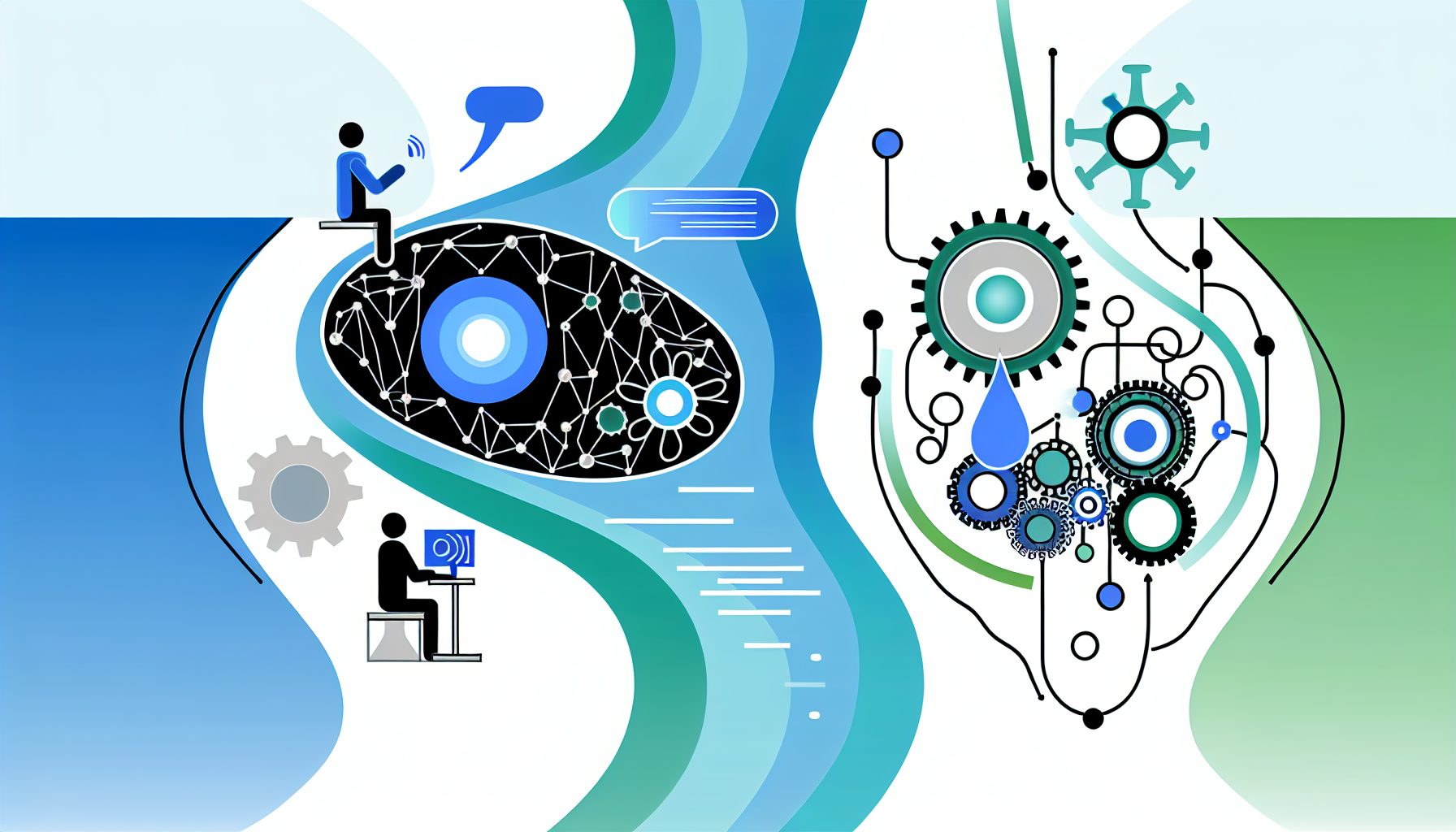
ChatGPT Workflows vs AI Toolchains: A Practical Guide to Optimizing Agent Automation
As artificial intelligence continues to merge into the fabric of our daily professional tasks, a pressing question arises: how do we effectively harness these technologies to streamline our workflows? In this guide, we explore the nuances between ChatGPT workflows and AI toolchains. Understanding these concepts is essential for optimizing agent automation in various fields.
Summary
This article outlines the differences between ChatGPT workflows and AI toolchains, providing a roadmap for organizations to optimize automation strategies based on task complexity, user experience, and scalability needs.
Estimated Reading Time
Approximately 8 minutes.
Key Takeaways
- Understand the Differences: ChatGPT workflows focus on conversational AI, whereas AI toolchains integrate multiple technologies for complex tasks.
- Task Classification: Identify if the task at hand is simple and reactive (ChatGPT) or complex and data-driven (AI toolchain).
- Integration Matters: Evaluate the robustness of integration for a seamless workflow.
- Scalability: Choose the right approach based on future growth and data handling requirements.
- User Experience: Optimize based on whether the solution is user-facing or a backend process.
Table of Contents
- Context and Challenges
- Solution / Approach
- Concrete Example / Case Study
- FAQ
- Authority References
- Conclusion
Context and Challenges
AI workflows and toolchains might seem similar, yet they present distinct advantages and challenges. ChatGPT workflows involve using conversational agents designed for natural language processing tasks, allowing users to interact with AI in a more intuitive manner. On the other hand, AI toolchains comprise a series of interconnected tools and technologies harnessing different AI capabilities to fulfill complex tasks.
The challenge lies in deciding when to use a ChatGPT workflow versus an AI toolchain. Organizations often grapple with issues such as integration ease, scalability, and task complexity. Many find that while natural language interactions are beneficial for straightforward queries, more complex automation tasks may demand a toolchain approach for better results.
Solution / Approach
The solution to optimizing agent automation starts with a clear understanding of your specific needs. Using AI agents and automation as a framework, here’s how to approach your automation strategy:
- Identify Your Tasks: Determine whether your tasks are repetitive and data-driven, which may benefit from a toolchain, or conversational and reactive, suitable for ChatGPT.
- Assess Integration Needs: Understand how various tools will play into your existing systems. Toolchains often require a more robust integration effort.
- Evaluate Scalability: Consider how the solution will grow with your business. Toolchains can offer greater scalability for large datasets and complex workflows.
- Optimize for User Experience: For user-facing applications, a ChatGPT workflow provides a more seamless interaction, while backend processes may require multiple tools working in harmony.
Once you’ve assessed these components, you can better decide whether to implement a ChatGPT workflow for straightforward tasks or an AI toolchain for more complex automation challenges.
Concrete Example / Case Study
Imagine a customer service department aiming to enhance efficiency while managing high volumes of inquiries. Implementing a ChatGPT workflow allows customers to get instant responses to common queries. This solution excels in scenarios where interactions can remain conversational and casual.
However, consider a situation where a company wants to automate the entire order processing system. Here, an AI toolchain integration might be more fitting. The sequence could involve:
- Using a natural language processing tool to parse customer orders.
- Integrating a data processing tool to check inventory and validate payment.
- Employing a logistics API that schedules shipping based on live data.
This blend of tools promotes efficiency, accuracy, and automation that a singular ChatGPT workflow cannot achieve alone. Decision-makers must carefully weigh the desired outcome and implementation complexity against their organizational goals.
FAQ
1. When should I choose a ChatGPT workflow over an AI toolchain?
Choose a ChatGPT workflow for tasks that involve simple, conversational interactions. Opt for an AI toolchain for more complex processes requiring interaction between multiple systems or tools.
2. How do I measure the success of my automation solution?
Success can be gauged through metrics such as response time, accuracy of information provided, customer satisfaction scores, and overall cost reduction. Make sure to establish baseline metrics before deployment for effective measurement.
3. Can I switch from ChatGPT workflows to an AI toolchain later on?
Yes, switching is possible. However, it requires a reassessment of your integration systems and workflows. Ensure you have a solid plan in place for migrating data and processes to avoid disruptions.
Authority References
For a deeper understanding of AI and its applications, consider these authoritative references:
- What is Artificial Intelligence?
- Understanding Automated Processes in Interactive Systems
- An Introduction to AI Toolchains
Conclusion
Understanding the differences between ChatGPT workflows and AI toolchains is crucial for optimizing agent automation. By carefully analyzing your tasks and integration needs, you can choose the right approach that enhances operational efficiency. Remember, whether you adopt conversational AI or a comprehensive toolchain, the goal is to create a seamless experience that meets user needs while simplifying complex tasks.


Leave a Reply