
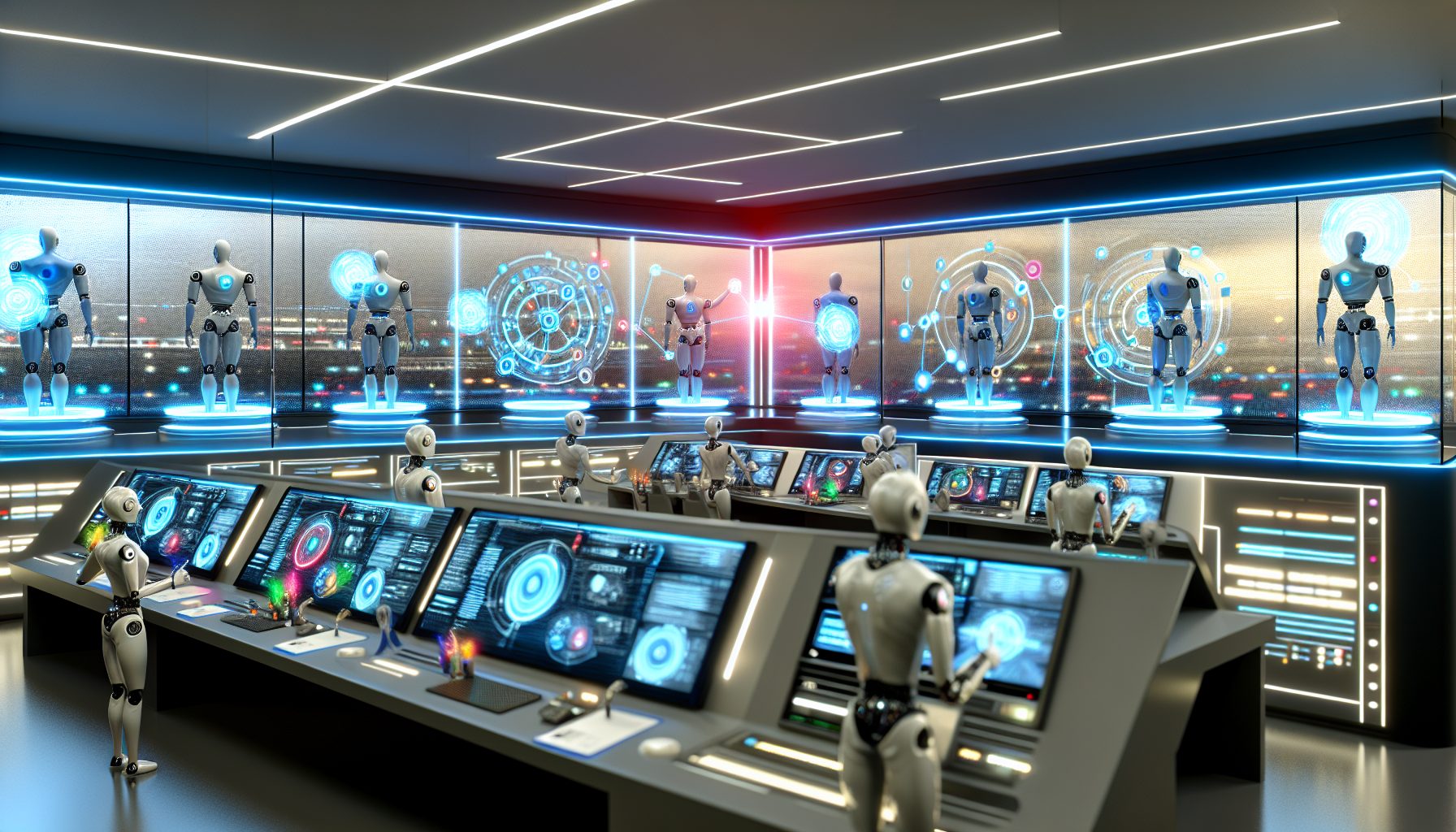
Coordinating Autonomous Agents: Multi-Agent Systems, ChatGPT Prompts, and Orchestration for Smarter Task Automation
The rise of autonomous agents has unlocked transformative potential for task automation, but coordinating these agents presents significant challenges. Imagine a future where a multitude of AI agents collaborate seamlessly to accomplish complex tasks without human intervention. This vision is not merely theoretical; it represents a real opportunity for organizations seeking to enhance their automation strategies dramatically.
In this article, we will explore the world of multi-agent systems, examine how tools like ChatGPT facilitate real-time communication among agents, and illustrate effective orchestration methods for these agents. Developing a robust understanding of this landscape is essential for businesses aiming to optimize operations and reduce costs.
Estimated Reading Time: 7 minutes
- Discover the core concepts of multi-agent systems.
- Learn how ChatGPT enhances communication among autonomous agents.
- Understand the different orchestration strategies for effective collaboration.
- Explore practical applications and case studies in real-world scenarios.
- Anticipate the main challenges of deploying multi-agent systems.
Table of Contents
- Context and Challenges
- Solution / Approach
- Concrete Example / Case Study
- FAQ
- Authority References
- Conclusion
Context and Challenges
Multi-agent systems comprise multiple autonomous agents that interact with one another and their environment to collaboratively solve complex problems. They find applications across various fields such as robotics, disaster response, and automated customer service. Although this technology holds immense promise, several challenges remain.
A primary challenge is communication: agents require a robust framework to understand and relay information amongst themselves to execute tasks efficiently. Furthermore, varying agent capabilities and environmental unpredictability can complicate coordination efforts.
Ethical considerations and control limitations also pose constraints on deploying agents effectively. Businesses may experience hesitation in trusting fully autonomous systems, particularly when critical decisions are involved. As we delve deeper into solutions, addressing these concerns remains vital while maximizing the efficiency of agent interactions.
Solution / Approach
The cornerstone for effective coordination among autonomous agents lies in adopting orchestration strategies that enhance collaborative efforts while leveraging communication tools like ChatGPT. Multi-agent architectures can be organized through a centralized, decentralized, or hybrid approach, each carrying its unique advantages and disadvantages.
A centralized approach allows for easier control but poses risks; if the central agent fails, the whole system might collapse. In contrast, decentralized systems increase resilience and scalability but heighten communication complexity among agents. Hybrid systems attempt to strike a balance, often demonstrating effectiveness in diverse applications.
Utilizing AI agents and automation strategies can further optimize these systems by integrating advanced processing capabilities obtained from ChatGPT. By enabling agents to communicate and make decisions based on natural language processing, we can substantially enhance their collaborative capabilities. This orchestration can involve task assignments, intelligence sharing, and dynamic role adjustments according to situational demands.
Concrete Example / Case Study
Let’s consider a practical scenario involving a logistics company embarking on a mission to enhance package delivery efficiency. The organization deploys multiple drones as autonomous agents responsible for delivering packages within urban settings. Each drone operates within a multi-agent system that enables real-time communication via a ChatGPT-based interface.
The system architecture is critical; the logistics company opts for a hybrid approach to manage risks effectively. When a drone encounters an obstacle, it communicates with nearby drones to share status updates and alternative routing options instantly—reducing delays and improving efficiency.
Moreover, should a drone experience dwindling battery power, neighboring agents can promptly reallocate delivery responsibilities or navigate to a nearby charging station for urgent efficiency. This integration minimizes delivery times, enhances customer satisfaction, and boosts operational effectiveness. The case illustrates that with the right coordination and communication framework, teams of autonomous agents can achieve exponentially more together than alone.
FAQ
What are the key components of a multi-agent system?
The core components of a multi-agent system include:
- Autonomous agents
- An environment for interaction
- Communication protocols
- Mechanisms for task allocation and execution planning
How can ChatGPT benefit autonomous agents?
ChatGPT enhances the communication capabilities of autonomous agents by enabling them to comprehend and relay complex instructions in natural language, facilitating better decision-making and collaboration among agents.
What are the main challenges in deploying multi-agent systems in real-world scenarios?
Challenges include:
- Ensuring effective communication
- Managing agent capabilities
- Addressing ethical considerations
- Handling unpredictable environmental changes that may impact decision-making
Authority References
For further reading and in-depth insights on multi-agent systems and related technologies, consider exploring the following resources:
- Multi-Agent System Architectures: A Survey
- A Survey of Multi-Agent Systems: Past, Present, and Future
- Handbook of Research on Multi-Agent Systems
Conclusion
Coordinating autonomous agents through multi-agent systems and advanced communication strategies like ChatGPT is not only feasible; it is increasingly essential in our technology-driven world. This approach can vastly transform efficiency and enhance operational effectiveness across industries. For organizations eager to explore this rapidly evolving field, staying informed and adaptable will lead to significant benefits in smarter task automation. As advancements continue to unfold, embracing these technologies will position your organization for success in the age of automation.


Leave a Reply