
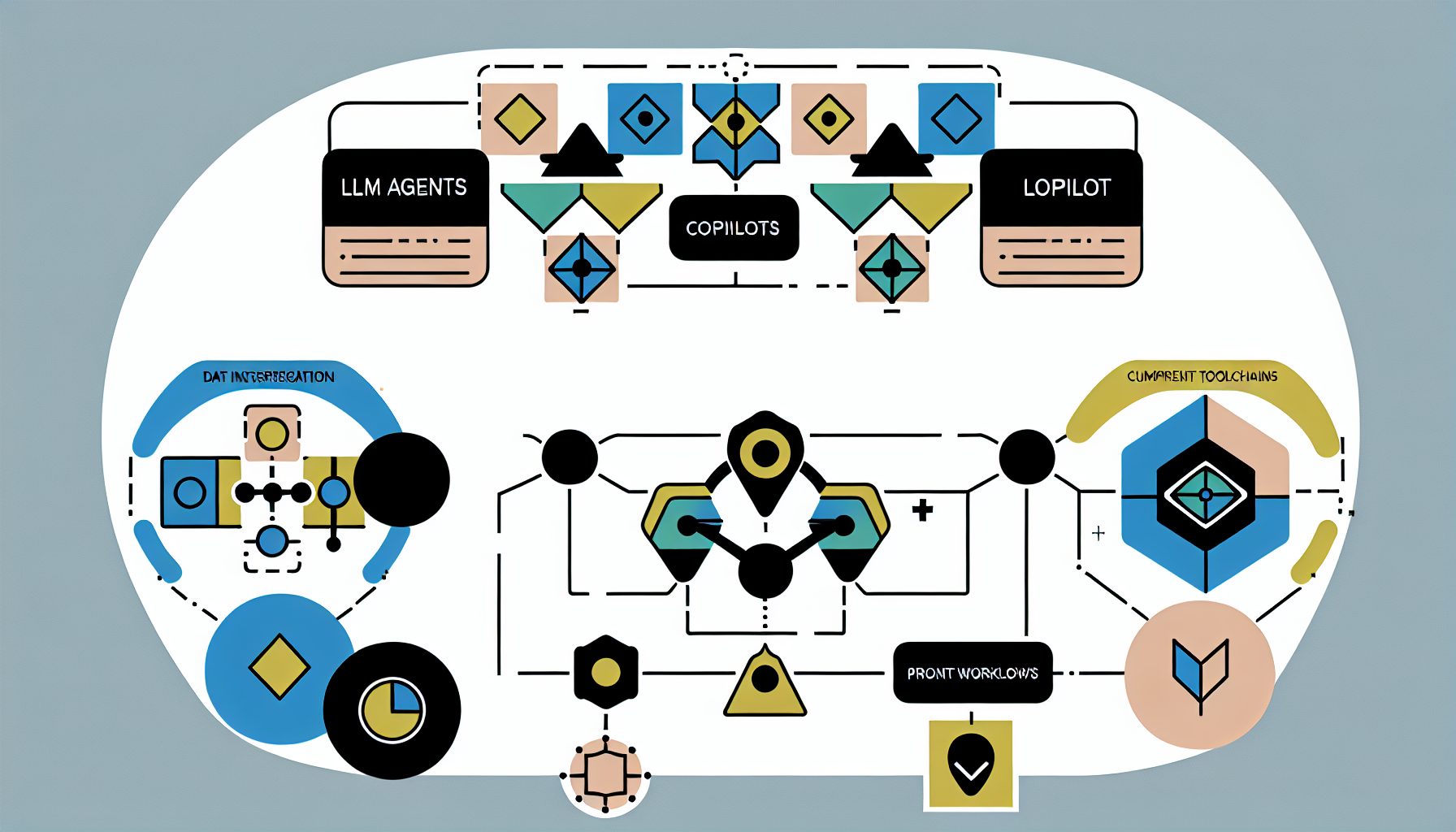
Comparing AI Toolchains for Autonomous Agent Workflows: LLM Agents, Copilots, and Prompt Workflows
In today’s fast-paced digital landscape, the rise of autonomous agents has transformed how tasks are accomplished across various sectors. As businesses focus on enhancing productivity and streamlining operations, understanding the different AI toolchains that drive these autonomous agents becomes crucial. This article aims to illuminate the distinct categories of AI toolchains—LLM Agents, Copilots, and Prompt Workflows—helping you make informed decisions for your implementation needs.
Estimated Reading Time: 8 minutes
- Understanding the differences between LLM Agents, Copilots, and Prompt Workflows.
- The significance of integrating AI toolchains into existing workflows.
- How to choose the right AI toolchain for specific tasks.
- The benefits and challenges of adopting these autonomous agents.
- Real-world examples of effective AI toolchain implementations.
Table of Contents
- Context and Challenges
- Solution / Approach
- Concrete Example / Case Study
- FAQ
- Authority References
- Conclusion
Context and Challenges
The concept of autonomous agents refers to systems that can perform tasks without direct human intervention. These agents rely on AI toolchains utilizing advanced models to interpret data, generate outputs, and execute actions. However, choosing the right toolchain presents several challenges, including:
- Complexity: Each toolchain presents its intricacies, making it challenging to understand how they fit into existing workflows.
- Integration: Seamlessly integrating these systems with other tools and platforms is essential for operational success.
- Performance: Different types of AI tools exhibit varying levels of efficiency and effectiveness, impacting overall productivity.
Key concepts to grasp include the types of agents available. LLM (Large Language Model) agents are designed to understand and generate human-like text, making them ideal for conversational interfaces. Copilots, on the other hand, assist users in practical tasks, often functioning as intelligent assistants tailored to specific applications, while Prompt Workflows leverage structured prompts to guide AI responses, allowing for more controlled outputs.
Solution / Approach
When selecting an AI toolchain for autonomous agent workflows, a strategic approach is essential. Here’s how each toolchain functions in practice:
- LLM Agents: These agents utilize vast datasets to understand context and generate relevant responses. Businesses can deploy them for applications including customer service chatbots, content generation, and more.
- Copilots: Often embedded within software applications, copilots enhance user productivity by offering suggestions based on ongoing tasks. A significant example is GitHub Copilot, which assists developers by suggesting code snippets.
- Prompt Workflows: This strategy involves setting up a series of structured prompts that guide the AI in producing desired outcomes. For instance, in a marketing department, an AI might follow predetermined prompts to generate reports on campaign performance.
Concrete Example / Case Study
To illustrate the impact of these AI toolchains in practice, let’s consider a marketing agency tasked with enhancing its email outreach. The agency implemented an LLM agent to analyze previous campaigns and draft personalized emails. By leveraging the LLM agent, the marketing team could produce tailored messages that resonated with recipients based on their past interactions.
Simultaneously, a Copilot tool was integrated into their email platform to aid marketers during the drafting process. As marketers composed emails, the Copilot offered suggestions and best practices based on current editing trends and engagement metrics.
Finally, the team established a Prompt Workflow to automate performance reports, enabling the AI to pull metrics and compile them into a comprehensive summary every month. This combination resulted in improved email engagement rates, reduced drafting time, and a substantial increase in campaign effectiveness.
FAQ
What are LLM agents, and how do they differ from Copilots?
LLM agents focus on generating human-like text based on context and prompts, making them suitable for conversational tasks. In contrast, Copilots assist users by enhancing their productivity within existing applications, providing contextual suggestions rather than generating full outputs.
Can I integrate multiple AI toolchains into my existing systems?
Yes, integrating multiple AI toolchains is often beneficial. However, it requires careful planning to ensure compatibility and maximize efficiency. Prioritize interoperability and evaluate how each toolchain can complement the others.
What factors should I consider when choosing an AI toolchain?
Key considerations include the specific tasks you want to automate, the ease of integration with your current systems, the user-friendliness of the toolchain, and the potential return on investment based on projected efficiency gains.
Authority References
For further reading and understanding of AI toolchains, consider visiting:
- OpenAI Research – Leading research in AI and machine learning.
- Microsoft Research – Deep insights into advanced AI technologies.
Conclusion
Understanding the distinctions between LLM Agents, Copilots, and Prompt Workflows is crucial for organizations aiming to implement autonomous agents effectively. Each toolchain offers unique benefits and can be tailored to meet the specific needs of various tasks. By carefully assessing your requirements and considering the examples provided, you can make informed decisions to enhance your workflows and drive success in your operations.


Leave a Reply